
A massive effort to save monarch butterflies connects people from Canada to Mexico, with paths of milkweed and data along the way.
By Britany Robinson
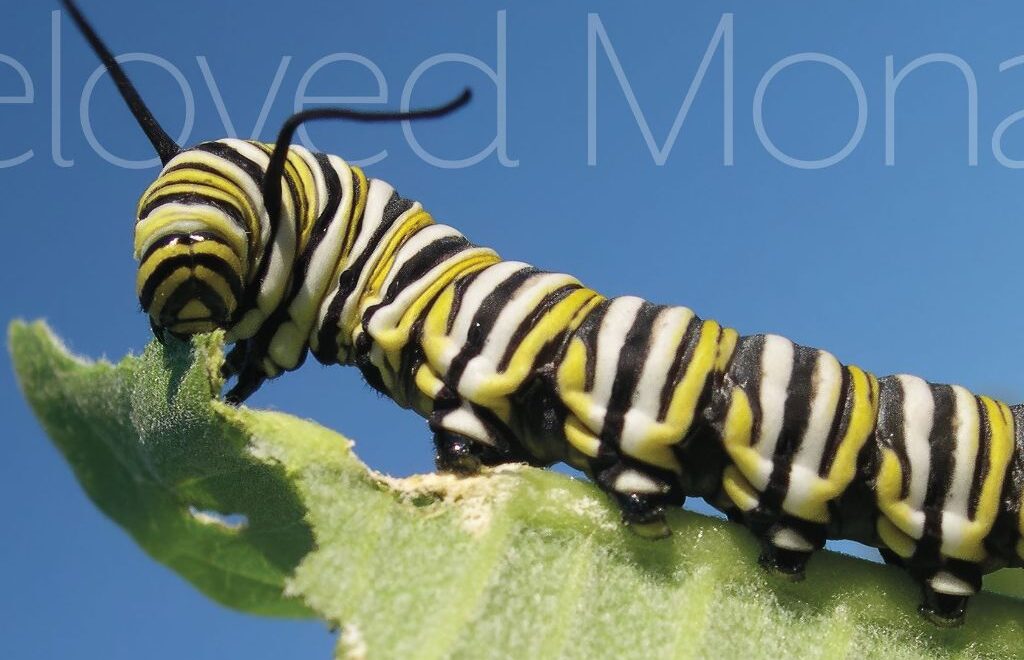
The first time I see one, I gasp. A tiny caterpillar is stretched out on a long green leaf. It has black and yellow stripes, like it was painted with a pin tip. Crouching to look closer, I can see its tiny mouth opening and closing at the edge of the leaf, mechanically carving a bite mark many times bigger than its body.
In the book I read to my daughter almost every night, The Very Hungry Caterpillar eats many things, including a slice of chocolate cake and a pickle. But this caterpillar is a monarch so it only eats milkweed. I planted this milkweed in May along with a dozen or so other native plants. I wanted to make our backyard a little friendlier to pollinators, and I knew milkweed was critical to monarchs, who lay their eggs on the leaves. When the eggs hatch, the caterpillars plump up on milkweed, which also gives them a superpower, making them toxic to predators.
Planting milkweed is a simple act that can make a big difference in supporting a pollinator population in decline. Since the 1990s, the number of monarch butterflies has declined over 80%. Much of that decline is due to habitat loss. The midwestern United States once supported a vast breeding ground with swaths of wild milkweed, but pesticide use and the adoption of pesticide-resistant crops decimated wild growth. Widespread herbicide application and mowing along highways have also torn through milkweed habitat.
Despite weighing just 0.0095 to 0.026 ounces, monarch butterflies are incredibly resilient. We see this in their annual migration. Once a year, a super-generation of butterflies in the northern states and Canada travel over 3,000 miles to reach Mexico, where they spend the winter hibernating in oyamel fir forests.
On the spring journey north, monarchs are part of a multi-generational relay, living for only a few weeks before laying eggs and dying. The next generation continues further north, and it takes three or four generations for them to reach their northern breeding grounds. But the super-generation, born in the northern states and Canada, will live about nine months, completing the entire southern journey back to their overwintering habitat in Mexico. The caterpillar that emerged from an egg in my garden in August is part of the super generation.
The monarch butterfly migration has always been full of obstacles, from bad weather to natural predators. But the journey keeps getting harder. Traffic on busy highways presents frequent danger, as do developed areas stripped of milkweed and native flowers that monarch butterflies rely on for fuel. Then comes climate change, which is causing bigger and more frequent storms that can blow monarchs off course, making it impossible to reach their destination.
In short, my backyard friend had a daunting journey ahead. But also, this caterpillar was born into a good year for monarch butterflies. In March, the World Wildlife Fund (WWF) of Mexico released a report documenting a 64% increase in the hibernating population, as documented last winter. Researchers have noted that populations fluctuate every year, and one good year is not indicative of an upward trend. But it is a sign of hope.
“In my backyard, seeing one caterpillar was a thrill. And then three and four! A week later, my little swamp milkweed was home to ten hungry caterpillars, chomping away and growing fast.”
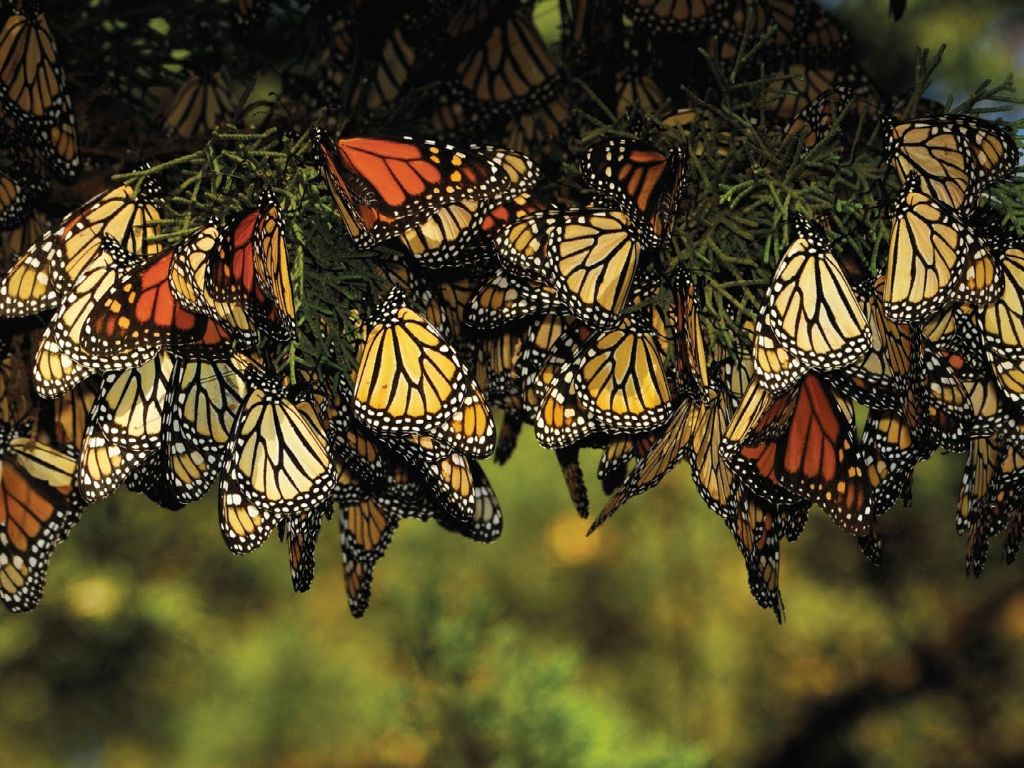
Monarch butterflies (Danaus plexippus) resting on a tree branch in their winter nesting area.
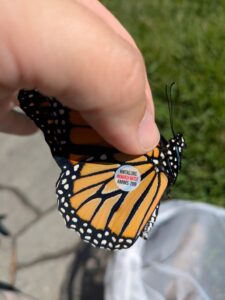
Jenn Farrell, a zoo educator at Connecticut Beardsley Zoo, says she’s seen noticeably more butterflies this fall. Farrell helps run the Monarch Watch training program, which she brought to Beardsley in 2020. The virtual training sessions support Monarch Watch, a keystone program of monarch conservation, started at the University of Kansas in 1992. Monarch Watch partners with dozens of organizations to track monarchs on their annual journey from Canada to Mexico, using tiny round stickers with unique codes so that volunteers can track their routes. The Monarch Watch training sessions instruct participants on how to safely catch and apply tracking stickers to a monarch butterfly’s wing. All you need is a butterfly net, the tracking stickers (which you can order from shop.monarchwatch.org) and a data sheet to record certain details, which they’ll send you with the stickers. Farrell says some people feel comfortable catching and tagging after the online session, while others like to come by the zoo for some in-person training. Monarchs are not as delicate as they might seem, but it’s still important to attend the training, to learn how to catch, tag, and release them without causing unnecessary harm.
Researchers in Mexico then seek out those sticker-wearing butterflies to confirm the completion of their migration.
“We learn a lot about the monarch population based on where, when, and how many monarchs are being tagged by community scientists,” says Director of Monarch Watch Dr. Kristen Baum. Monarch Watch sends out thousands of these tags each year, and over 3 million butterflies have been tagged by community scientists since the program started.
Baum says this year is a big one from a data perspective. In late 2025, radio tagging was implemented for the first time, making it possible to follow monarchs along their entire route. The BlūMorpho tags, developed by Cellular Tracking Technologies (CTT) in collaboration with the Cape May Point Arts & Science Center (CMPASC), are a major innovation in lightweight solar technology, allowing researchers (and anyone who is interested) to track individual monarchs in real time. Hundreds of these tags were deployed this year. Together, Monarch Watch stickers and The BlūMorpho tags are accumulating an enormous amount of data to help scientists understand migration patterns and how we can better support this pollinator species along the way.
“One of the nice things about monarchs from the conservation perspective is that there is something that everyone can do,” says Baum. “Some people may focus on providing habitat [like] milkweed and nectar plants, while others may focus on contributing data to community science projects or educating people about monarchs and their conservation needs.”
Farrell says she meets a lot of people at the zoo who are inspired by the bigger animals they see there, many of which face habitat loss and population decline. But when they ask how they can help, Farrell always tells them the same thing: “Look to your backyard, first.”
In my backyard, seeing one caterpillar was a thrill. And then three and four! A week later, my little swamp milkweed was home to ten hungry caterpillars, chomping away and growing fast.
I was looking forward to watching these caterpillars pupate and emerge as butterflies—to bid them farewell on their epic journeys. But nature is never so simple. One morning in mid-September, I walked through the dew-soaked grass, coffee in hand, to check in on them as I’d done every morning for weeks. But on this day, they were gone. I searched and searched—no caterpillars. It’s possible they were eaten; despite their toxicity, certain ants, spiders, and birds can still make them a meal.
I can’t know what became of the caterpillars in my yard, and we can’t know what next year will bring for monarch butterfly populations. But it does help to know how many people are out there, tagging and recording, planting more milkweed and native flowers, just wanting to help. There are so many unknowns, but a network of people across North America are collaborating—connected by a vast web of migrating monarchs and milkweed—to ensure future generations continue on this epic journey back and forth, visiting many of us along the way. Next year, I’ll plant more milkweed and hope for the best. I hope you will, too.
Britany Robinson is the editor of Connecticut Woodlands.