
The View from the Canopy
By Joey Listro
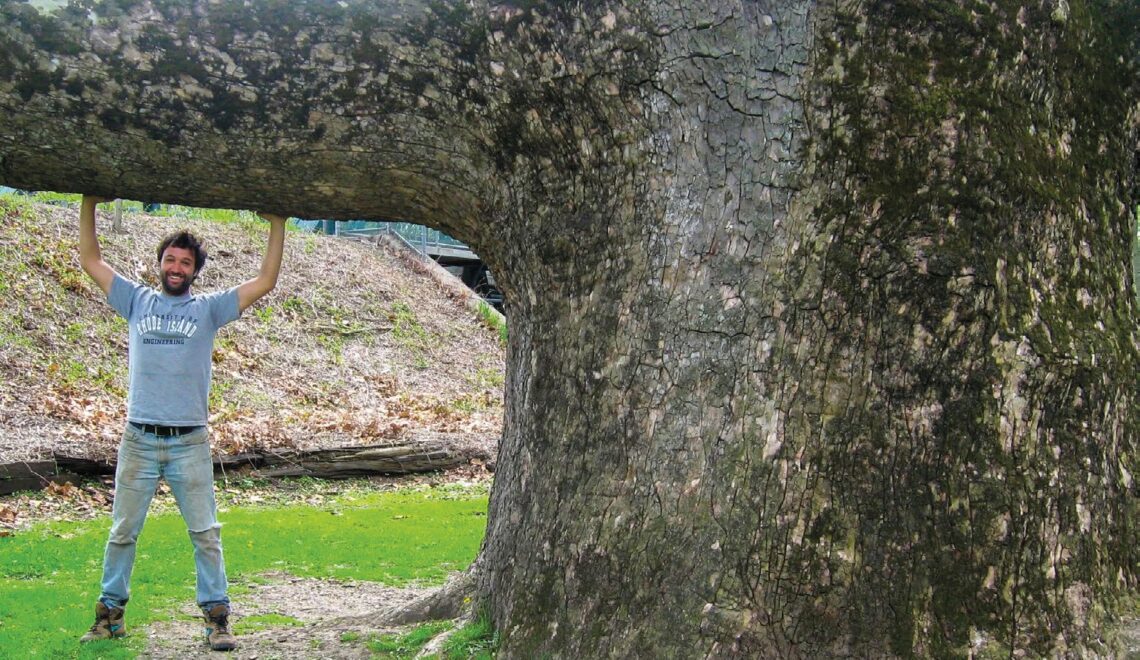
Back in 2011, I spent most of my days growing vegetables on farmland I leased in Simsbury. I would make the drive back and forth from my home in New Britain, passing a remarkable landmark along the way: the Pinchot Sycamore.
I admired the tree long before I understood its story. I knew it was impressive, with a massive trunk and a presence that was impossible to ignore. What I did not fully appreciate was the history it represented or how closely that history would one day connect to my own journey.
The sycamore is named for Gifford Pinchot, a Simsbury native who helped shape the early conservation movement in the United States and influenced generations of foresters through what would become the Yale School of the Environment. Like many historical figures, Pinchot’s legacy is complex. Yet the era he helped define was marked by a growing recognition that forests, parks, and other natural resources require thoughtful stewardship if they are to endure for future generations.
That idea has been at the heart of conservation in Connecticut for more than a century.
When CFPA was founded in 1895, forest loss, wildfire, and land degradation were pressing concerns. Early conservationists understood that cultivating healthy forests and public access to nature wouldn’t happen overnight. They were dedicated to a future they would never see. As I begin my tenure as CFPA’s Executive Director, I find myself reflecting often on those who came before us.
Over the past several months, I’ve had the privilege of meeting members, volunteers, donors, trail managers, conservation partners, and community leaders across Connecticut. During my “listening tour,” I have heard stories of trails maintained for decades, forests protected across generations, and countless volunteer hours invested in places that matter deeply to the people who care for them.
These conversations have reinforced an important truth: none of us begin this work at the starting line. We inherit trails we did not blaze, forests we did not plant, and institutions we did not build. Our responsibility is to steward them wisely and strengthen them for those who will come after us.
Looking back, I can see how that idea has shaped my own path. Agriculture first taught me the importance of caring for the land and sparked my interest in helping new farmers gain access to it. That work led me into community development, where I spent more than a decade helping connect people in urban neighborhoods to food, gardens, and environmental education. Along the way, I pursued graduate studies in public policy to better understand how organizations can advance both social and environmental outcomes.
At first glance, these experiences may seem distinct. But they are chapters of the same story. Whether growing food, strengthening communities, conserving forests, or maintaining trails, the work is about leaving something better than we found it.
That belief continues to guide CFPA. While the challenges facing Connecticut have evolved, our mission remains as relevant as ever—to care for forests and trails, advocate for conservation, and ensure that future generations experience the sense of wonder, belonging, and connection that inspire us today.
The Pinchot Sycamore has stood for generations and continues to grow. Today, it is a reminder that every generation inherits the work of those who came before it and bears responsibility to those who will follow. I am grateful for the opportunity to help lead CFPA in that spirit, and I look forward to the work ahead.
Joey Listro Cain is CFPA’s Executive Director.